
Physical AI and AIoT for Cold Chain Logistics
ColdChainLog AI examines Physical Artificial Intelligence (Physical AI) and the Artificial Intelligence of Things (AIoT) in cold chain logistics. For refrigerated warehouses, loading docks, and temperature-controlled transport, the practical goal is temperature-excursion response, shipment visibility, and transfer accountability. Technologies should be selected according to measurable operating needs, the reliability of the available observations, and the authority of the people responsible for shipment quality and equipment safety.
Contact ColdChainLog AIWhere cold-chain operations lose visibility
Temperature-controlled goods change custody at receiving, staging, loading, carrier transfer, and final delivery. Each handoff can introduce a missing scan, an open-door event, or an excursion that is difficult to reconstruct from disconnected records.
Begin with shipment traceability, monitoring of cold rooms and reefer units, and faster review of temperature deviations. These needs affect quality managers, warehouse supervisors, maintenance technicians, transportation planners, and systems integrators.
Cold Chain Logistics Warehouse Operations Overview
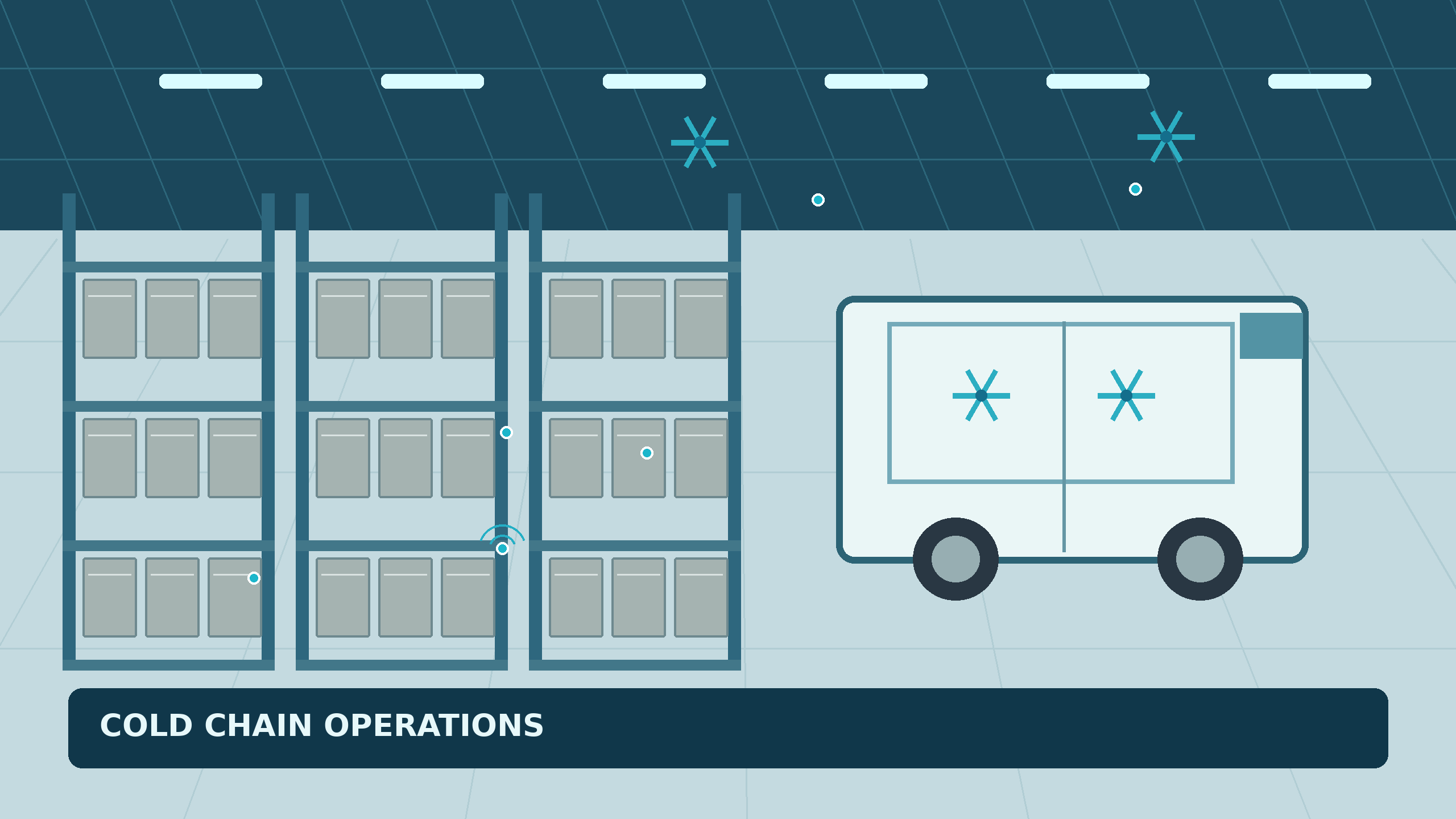
This illustration depicts refrigerated logistics infrastructure, including pallet storage, temperature control equipment, and shipment interfaces. It places refrigerated warehouses, loading docks, and temperature-controlled transport in the operational setting of temperature-excursion response, shipment visibility, and transfer accountability. The visual is an original technical illustration, not a photograph of actual personnel or a deployed system.
Solution pathways and operations
A representative workflow covers refrigerated warehouses, loading docks, and temperature-controlled transport. The operating team records an event, verifies a shipment or equipment identity, and reviews whether a temperature deviation, movement exception, or delayed handoff warrants intervention.
The desired outcome is temperature-excursion response, shipment visibility, and transfer accountability. Depending on the use case, records may pass between a handheld scanner, wireless gateway, analytics service, WMS or TMS, and an operator dashboard.
Implementation and next steps
Define a before-and-after baseline using shipment handoff completeness, response time, recorded excursions, equipment uptime, and the ability to verify that a corrective action occurred.
For this cold-chain use case, document device and shipment identity, readings and units, timestamps, relevant operating state, exception ownership, and independent confirmation of the response. Data access and retention should match product-handling and contractual requirements. Any stated accuracy, uptime, or risk reduction must be supported by representative testing.
Discuss a Cold Chain Logistics application
Share the product temperature requirements, facility or vehicle environment, operating process, available records, and the decision the team needs to improve. A feasibility discussion should establish the scope of any pilot before a capability or performance commitment is made.
Contact ColdChainLog AI